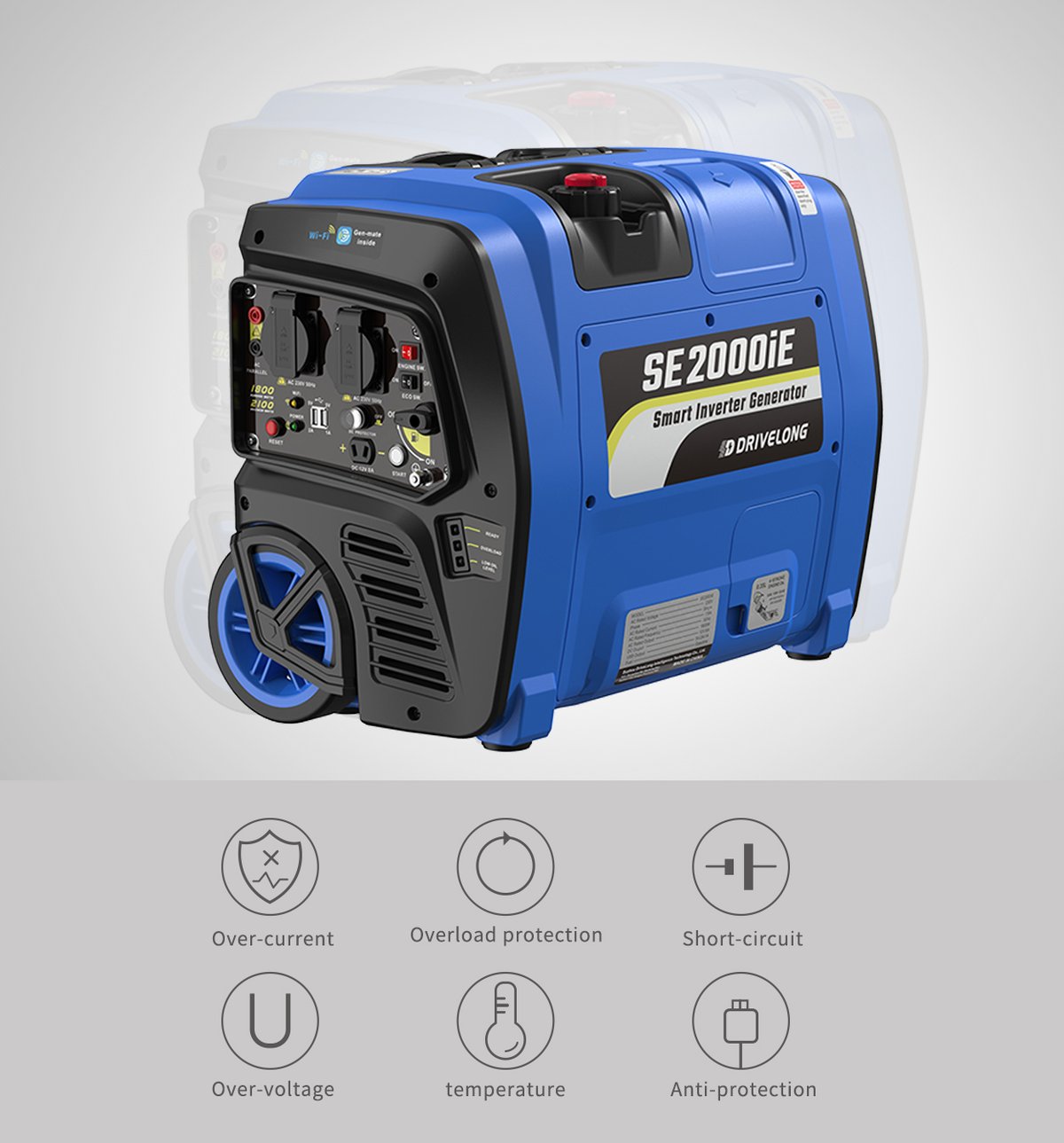
Is the constant drone of your generator turning your peaceful backyard into an industrial zone or disrupting critical operations? While a good muffler is your first line of defense against generator noise, true tranquility demands a more sophisticated approach. This guide delves into Advanced Generator Noise Reduction Techniques Beyond Mufflers, offering a comprehensive blueprint to silence even the most stubborn power plants. We're talking about strategies that move beyond simple exhaust redirection to fundamentally transform your generator's sound signature, enabling truly silent operation.
At a Glance: Quieter Generator Operations
- Generator noise typically ranges from 75-100 dB, with exhaust alone exceeding 115 dB at close range.
- Distance is your friend: Doubling the distance from the noise source can reduce sound by 6 dB.
- Vibration control is crucial; anti-vibration mats or a sand/gravel base can cut mechanical noise by up to 90%.
- Custom soundproof enclosures with baffled vents and mass-loaded vinyl are highly effective, but require careful planning for safety and airflow.
- Advanced exhaust modifications go beyond standard mufflers, using flexible piping and increased diameters to route noise away.
- Regular, precise maintenance reduces mechanical noise from worn components and vibrations.
- Load management and remote monitoring can optimize operation for quieter power delivery.
- Exploring alternative fuels and hybrid systems offers inherently quieter solutions.
- Always prioritize safety: Proper ventilation for carbon monoxide and heat dissipation is non-negotiable.
The Problem with Power: Understanding Generator Noise
Generators are workhorses, but they’re also inherently noisy machines. That persistent hum isn't just a nuisance; it's a symphony of several distinct sounds clamoring for attention. Standard open-frame generators typically blast out between 75 and 100 decibels (dB), which, for context, is louder than a vacuum cleaner or a busy street. The exhaust port alone can hit over 115 dB, potentially causing hearing damage at close range.
To truly tame this beast, you need to understand its roar. Here’s a quick breakdown of where all that racket comes from:
- Engine Operation: This is the core rumble – the vibrations, fuel ignition, and the rhythmic clang of crankshafts and pistons. Every moving part contributes.
- Exhaust System: The expulsion of hot, high-pressure gases creates a sharp, percussive sound. An unmuffled exhaust is like a constant sonic boom. While a good muffler helps immensely, our focus here is on augmenting or surpassing that basic component. (For those looking to dive deeper into the fundamentals, you can find a lot of useful information in our guide, All about generator mufflers.)
- Air Intake and Cooling Fans: Generators need air to run and fans to stay cool. At higher speeds or under heavy load, these components can generate a significant amount of whooshing and mechanical noise.
- Electrical Components: Buzzes, hums, and clicks from transformers, circuit breakers, and switches can also add to the overall sound profile, especially in larger units.
Once you know the sources, you can target them effectively. This isn't about magical solutions; it's about strategic, multi-pronged engineering.
Strategic Site Selection and Vibration Control: Quieting the Ground Up
Before you even think about fancy enclosures, consider your generator's location and its interaction with the ground beneath it. These fundamental steps can offer some of the most dramatic noise reductions.
Distance is Your First Decibel Reducer
It's simple physics: sound waves dissipate over distance. Strategically placing your generator further away from occupied areas can yield significant noise reduction without any complex modifications. Doubling the distance from the noise source typically slashes the sound pressure level by approximately 6 dB. If you can move your generator 100 feet away instead of 25, you'll notice a massive difference.
- Practical Tip: Walk around your property while the generator is running (safely, of course). Identify areas where the noise is less intrusive and consider routing power lines to that location. Remember, every foot counts.
Taming the Tremor: Vibration Isolation
A significant portion of engine noise transmits directly into the ground or surrounding structures as vibration. Isolating these vibrations is a cornerstone of advanced noise reduction.
- Anti-Vibration Mounts: Placing your generator on specialized vibration-dampening mounts, often made of neoprene or heavy-duty rubber, can dramatically reduce structure-borne noise. These mounts absorb the engine's oscillations before they can transfer to the ground.
- Soft Substrates: Elevate your generator on a bed of tamped sand or gravel. These materials are excellent at absorbing kinetic energy and preventing vibrations from resonating through concrete slabs or solid ground. This method can offer an impressive isolation efficiency of up to 90% for lower frequency vibrations.
- Isolation Pads: For smaller generators, simple anti-vibration mats placed directly underneath can make a noticeable difference. Ensure they are thick and dense enough to effectively decouple the generator from its resting surface.
By addressing vibration at its source, you're not just quieting the generator; you're preventing the ground and nearby structures from becoming giant speakers amplifying the hum.
Beyond the Basic Muffler: Advanced Exhaust Management
While a standard muffler is essential, for true silence, you need to think beyond a simple bolt-on can. The exhaust system is a primary noise culprit, and advanced techniques focus on both superior silencing and intelligent redirection.
Dual-Stage Silencing and Resonators
Traditional mufflers often focus on absorbing specific frequency ranges. Advanced exhaust systems might incorporate:
- Multiple Mufflers in Series: Running exhaust gases through two mufflers, one after the other, can provide significantly more sound attenuation than a single unit. Each muffler is designed to quiet different frequency bands, resulting in a broader spectrum of noise reduction.
- Resonators: These are chambers specifically tuned to cancel out particular sound frequencies by creating opposing sound waves. When integrated into the exhaust path before or after the main muffler, they can effectively eliminate bothersome hums that a standard muffler might miss.
Flexible Exhaust Routing and Remote Venting
One of the most effective ways to reduce direct exhaust noise is to simply get it away from your immediate area.
- Flexible Exhaust Pipe Extensions: Attach a flexible automotive exhaust hose (the kind used for car repairs) to your generator's existing exhaust port. You can use a bolt-on floor flange and a pipe nipple to create a secure connection, sealed with high-temperature silicone for durability and heat resistance.
- Route Away: Direct this extension pipe away from inhabited areas, ideally into a designated sound-trapping zone, such as behind a solid barrier wall or into a densely vegetated area that can help absorb sound.
- Maintain Back Pressure and Diameter: It's critical to maintain proper engine back pressure; increasing the exhaust path too much or using too small a diameter pipe can harm engine performance. Conversely, increasing the diameter of your extension pipe (e.g., a 2-inch pipe offers four times the cross-sectional area of a 1-inch pipe compared to a 1-inch pipe) can reduce exhaust velocity noise and improve flow, contributing to quieter operation and better engine health.
By smartly extending and directing your exhaust, you’re not just muting it; you’re literally moving the noise to where it won't bother anyone.
The Soundproof Enclosure: Building a Quiet Haven
For many, a custom-built soundproof enclosure is the ultimate solution for generator noise. This isn't just a box; it's a meticulously designed structure that blocks, absorbs, and redirects sound waves.
The Principles of Enclosure Design
An effective enclosure works on two main principles:
- Mass for Sound Blocking: Heavy materials are your best friends here. Plywood (¾ inch or thicker), MDF (Medium-Density Fiberboard), or even specialized acoustic plasterboard are excellent choices for the exterior walls. The denser the material, the more effectively it blocks sound transmission.
- Absorption for Sound Trapping: Once sound waves enter the enclosure, you don't want them bouncing around. Line the interior with porous, sound-absorbing materials.
Material Selection and Construction
- Outer Shell: Start with a sturdy frame (e.g., 2x4s) and clad it with high-mass materials like ¾-inch exterior-grade plywood or MDF. Double-layering these materials with an air gap between can further enhance sound blocking.
- Mass Loaded Vinyl (MLV): This is a heavy, flexible barrier material (1-2 lbs per square foot) that is exceptionally good at blocking sound. Apply MLV to the interior surfaces of your enclosure before adding absorption. Think of it as a heavy blanket that sound waves can't easily penetrate.
- Acoustic Sealants: Every seam, crack, and joint in your enclosure is a potential sound leak. Use acoustic caulk or sealant specifically designed for soundproofing to seal all gaps, ensuring a tight, airtight box. This is crucial for effectiveness.
- Sound Absorbing Liner: Over the MLV, install acoustic foam panels, mineral wool insulation (like Roxul Safe'n'Sound), or dense fiberglass insulation. These materials absorb sound energy, preventing echo and reverberation inside the enclosure, which would otherwise escape through any small opening. The goal is to "trap" the sound energy rather than letting it reflect and build up.
Critical Ventilation: Airflow Without Noise Escape
This is arguably the most challenging and critical aspect of enclosure design. Generators produce significant heat and lethal carbon monoxide (CO), so proper ventilation isn't just for noise reduction—it's for safety and generator longevity.
- Baffled Intake and Exhaust Vents: Sound travels in straight lines. Baffled vents force both incoming and outgoing air (and sound waves) to make multiple 90-degree turns. This "maze" design allows air to flow relatively freely while trapping sound waves within the turns.
- Construct these vents with internal fins or panels that create a zig-zag path. Line the interior of these baffles with sound-absorbing material to further deaden any escaping noise.
- Generous Sizing: Vents must be large enough to provide ample airflow, preventing overheating. Insufficient airflow will cause your generator to shut down or shorten its lifespan.
- Assisted Airflow: For larger or heavily loaded generators, an electric exhaust fan integrated into the baffled vent system can ensure consistent and adequate cooling. These fans should be quiet, industrial-grade models, often with their own sound insulation.
- Safety First: An enclosure must always be placed outdoors, well away from windows, doors, and other building openings. Carbon monoxide is odorless and deadly, and an enclosure traps it. Never operate a generator in an enclosed space without professional-grade exhaust ventilation designed to safely expel CO away from people. This is a non-negotiable safety concern, so please educate yourself on carbon monoxide safety precautions if you plan on using an enclosure.
Acoustic Barriers and Targeted Treatments: Shaping Your Soundscape
Beyond enclosing the generator itself, you can further enhance noise reduction by modifying the surrounding environment.
Dense Sound Barrier Walls
In industrial, commercial, or even larger residential settings, constructing standalone sound barrier walls can effectively block noise propagation.
- Materials: These walls need to be dense and continuous. Concrete, brick, or specialized pre-fabricated acoustic panels are excellent choices. Height is also crucial; the wall needs to be tall enough to create a "shadow zone" where the generator's direct sound waves are blocked.
- Placement: Position barrier walls between the generator and the noise-sensitive area. The effectiveness increases with proximity to the generator and height of the wall.
Internal Acoustic Treatment
Within an existing generator room or a large enclosure, applying additional acoustic treatment can significantly reduce reverberation and overall noise levels.
- Acoustic Panels: Install panels made of compressed fiberglass or mineral wool on walls and ceilings. These are specifically designed to absorb a wide range of sound frequencies.
- Heavy Curtains/Blankets: In less permanent setups, hanging heavy, sound-absorbing blankets or industrial acoustic curtains can provide a quick, though less effective, solution to reduce echo.
By strategically placing these barriers and treatments, you’re essentially redesigning how sound travels (or doesn't travel) from your generator.
The Unsung Heroes: Maintenance, Monitoring, and Load Management
Sometimes, the quietest solutions aren't about adding more materials but optimizing what you already have. Regular maintenance and smart operational practices play a significant role in reducing generator noise.
Precision Maintenance and Tuning
A well-maintained generator is inherently quieter. Worn parts, loose components, and an untuned engine create excess noise.
- Lubrication: Regularly lubricating all moving parts reduces friction, preventing squeaks, grinding, and excessive vibration.
- Component Replacement: Timely replacement of worn components like belts, bearings, mounts, and even spark plugs can eliminate sources of rattling and mechanical noise.
- Engine Tuning: Fine-tuning engine parameters—such as carburetor settings, fuel injection timing, and valve clearances—ensures smooth, efficient combustion. A generator running optimally vibrates less and operates more quietly. If you're looking for more general maintenance advice, our comprehensive generator maintenance guide is a great place to start.
Remote Monitoring and Dynamic Load Management
Modern technology offers sophisticated ways to manage noise by optimizing how and when your generator operates.
- Remote Monitoring: Real-time monitoring systems allow you to track engine performance, fuel levels, and load demands without being physically near the generator. This facilitates timely maintenance and allows you to identify issues that might contribute to noise before they become major problems.
- Load Management: Many advanced generators, especially in commercial settings, can dynamically adjust their power output in response to demand. By avoiding constant full-throttle operation when not needed, the generator can run at lower, quieter RPMs. This not only reduces noise but also conserves fuel and extends engine life. For example, rather than running at 100% capacity for a 50% load, a smart system can scale back, leading to quieter and more efficient operation.
Greener, Quieter Power: Alternative Fuels and Technologies
Sometimes the best noise reduction technique is to choose a different kind of generator altogether, or to reduce your reliance on traditional fuel types.
Natural Gas and Propane Generators
Compared to diesel or gasoline units, natural gas and propane generators often operate with less vibration and a smoother combustion cycle, resulting in a naturally quieter operation.
- Fuel Source: Natural gas provides a continuous fuel supply from a utility line, eliminating the need for noisy refueling and often burning cleaner. Propane is stored in tanks, similar to gasoline, but burns cleaner and can be quieter.
- Reduced Vibrations: The combustion characteristics of these fuels can lead to a more stable engine operation, thus fewer vibrations and less mechanical noise. You can learn more about different types of generators and their applications to see if one of these is right for you.
Hybrid and Inverter Systems
- Hybrid Generators: These systems combine traditional fuel engines with battery storage. The engine can run intermittently to charge the batteries, then shut off, allowing the battery bank to provide silent power for extended periods. This drastically reduces overall run time and noise.
- Inverter Generators: These units are designed for efficiency and quietness from the ground up. They produce AC power, convert it to DC, and then "invert" it back to clean AC power. This allows the engine to adjust its speed according to the load, meaning it doesn't always have to run at full throttle, leading to significantly quieter operation. Many inverter generators operate below 60 dB, which is comparable to a normal conversation.
Integrating Renewable Energy
Reducing your generator's run time by offsetting its load with renewable energy sources is a powerful way to reduce noise.
- Solar Panels and Wind Turbines: Integrate solar photovoltaic panels or small wind turbines into your power system. During periods of sun or wind, these sources can carry part or all of the load, allowing your generator to remain off or run at a reduced capacity. This approach not only quiets your environment but also reduces fuel consumption and carbon footprint. For more on this, check out our insights on integrating renewable energy solutions.
- Green Roofs: While not directly generator-related, planting green roofs on nearby structures can absorb ambient noise, including sound waves emanating from a generator. These living layers of vegetation act as natural sound dampeners.
Navigating the Rules: Community Engagement and Regulatory Compliance
Even with the quietest generator, ignoring local regulations or community concerns can lead to headaches. Proactive engagement and compliance are crucial.
Understanding Local Noise Ordinances
Noise regulations vary widely by municipality, zoning, and even time of day.
- Research: Before investing in advanced noise reduction, research your local noise ordinances. These often specify maximum permissible decibel levels during different hours (e.g., stricter limits at night) and may have rules about continuous noise sources.
- Permits: Some areas require permits for generator installation, especially for permanent or large-scale units, and these permits often include noise level stipulations. Understanding local noise regulations can save you significant trouble down the line.
Engaging with Neighbors
If your generator is near residential areas, a little diplomacy goes a long way.
- Open Communication: Discuss your plans for noise reduction with neighbors. Explaining the steps you're taking to minimize disruption can foster goodwill.
- Demonstrate Effort: Showing that you're investing in solutions and actively monitoring noise levels can prevent complaints and build trust.
Safety First: Non-Negotiable Considerations
While the pursuit of silence is noble, it must never compromise safety. Ignoring these critical factors can have deadly consequences.
- Carbon Monoxide (CO) Hazard: We've mentioned it before, but it bears repeating: generators produce carbon monoxide, an odorless, colorless, and highly toxic gas. Never operate a generator in an enclosed space without robust, dedicated ventilation that routes all exhaust gases safely outdoors and away from building openings. Install CO detectors in any nearby structures.
- Heat Dissipation: Enclosures trap heat. Insufficient airflow will cause your generator to overheat, potentially damaging the unit, reducing its lifespan, and creating a fire hazard. Ensure your baffled ventilation system provides adequate air exchange for both cooling and exhaust removal.
- Fire Risk: Generators deal with fuel and produce heat. Ensure your enclosure materials are fire-resistant where appropriate and that no flammable materials are stored nearby. Maintain clear access for maintenance and emergencies.
- Electrical Safety: All electrical connections, including power output and grounding, must be correctly installed and maintained by qualified professionals to prevent shock or fire.
Always remember that safety is paramount. If you're unsure about any aspect of installation or modification, consult with a qualified electrician or generator technician.
Common Questions About Quieting Your Generator
Can I completely eliminate all generator noise?
While it's possible to dramatically reduce generator noise to a whisper (e.g., below 50 dB), achieving absolute, undetectable silence is extremely difficult and usually impractical for most applications. The goal is typically to reduce it to an acceptable, non-intrusive level.
How much can I realistically expect to reduce the noise?
With a combination of advanced techniques (enclosure, exhaust modification, vibration control), reductions of 20-40 dB are achievable, transforming a roaring generator (80-100 dB) into a much quieter, conversational hum (50-60 dB).
Are these advanced techniques expensive?
The cost varies widely based on the size of your generator and the complexity of the solutions. Building a robust, soundproof enclosure with baffled ventilation, for instance, requires an investment in materials and potentially professional labor. However, the long-term benefits of quieter operation, reduced complaints, and enhanced usability often outweigh the initial cost.
Will modifying my generator void its warranty?
Potentially. Always check your generator's warranty terms before making any significant modifications. Some alterations to the exhaust or engine components might void parts of the warranty. Stick to external modifications and ensure any internal adjustments are performed by certified technicians using approved parts.
Is a "silent generator" worth the extra cost upfront?
Often, yes. Inverter generators and purpose-built "silent" models are designed from the ground up for quiet operation. They typically feature fully enclosed designs, advanced mufflers, and engine speed regulation. If noise is a primary concern, investing in one of these can be more cost-effective and less hassle than extensively modifying a standard, louder generator.
Your Blueprint for Quiet Power
Quieting a generator beyond its basic muffler requires a thoughtful, multi-faceted approach. It's about systematically addressing every source of noise – from vibrations underfoot to the rush of air through cooling fans, and the powerful expulsion of exhaust gases.
Start with the fundamentals: optimize your generator's location and ensure it's properly isolated from vibration. Then, explore advanced exhaust solutions that reroute noise away. For the most significant impact, design and construct a well-ventilated, soundproof enclosure using high-mass and absorbent materials. Don't forget the power of regular maintenance, smart load management, and considering alternative, inherently quieter generator technologies.
By combining these advanced techniques, you’re not just turning down the volume; you’re reclaiming your peace and ensuring your power generation remains a useful asset, not a sonic intrusion. The path to a truly silent operation is within reach, and with this guide, you have the blueprint to get there.